“The motto “Nothing About Us Without Us” relies on this principle of participation, and it has been used by Disabled Peoples Organizations throughout the years as part of the global movement to achieve the full participation and equalization of opportunities for, by and with persons with disabilities.” From the United Nations enAble website.
What is Person-Centered Planning?
According to the Mass.gov handout, “Person-Centered planning is a process, directed by the participant, intended to identify the strengths, capacities, preferences, needs and desired outcomes of the participant.” (Centers for Medicare and Medicaid). It should be the process by which any service plan of care, individual action plan, etc., is developed. It replaces previous processes for treatment plan development that may have more typically been driven by the provider/caregiver system.“
When your child is just beginning the journey within the “special education world”, the parents, caregivers, teachers, and providers all come together as a team to discuss the student’s strengths and weaknesses and what the service plans will look like. As your child grows, the shift begins to have the student become a more active participant in their planning process. In Massachusetts, when your student turns 14 years old, you must legally invite them to participate in their IEP meetings. Students can participate in some manner before that, but once they are 14, they need to be invited.
This is also the age at which transition planning begins in Massachusetts. So, at this age and stage of the IEP process, the shift to a more person-centered planning model should occur.
Person-Centered planning resources
So, what does this mean? When our family was going through this process, I used the analogy of “Who is driving the bus?”. While L was always the focus, due to age, disability, and other factors, we, as his parents, teachers, and providers, were the ones having the in-depth discussions and driving the decisions that were made related to goals and objectives. Once he turned 14, the transition planning form came into effect, and he generated the vision statement…..what did he want to do, work on, and explore? While we were all still key players, L was now “driving the bus,” and we were there to provide the roadmap to success, point out the obstacles, and determine how we could re-route to get him where he wanted to go.
As we transitioned from the public school setting into the adult service setting, having this person-centered plan significantly helped everyone on the team stay focused on the path that would lead to the most appropriate “next step” and gave us a target of what skills and areas were the priority at the time.
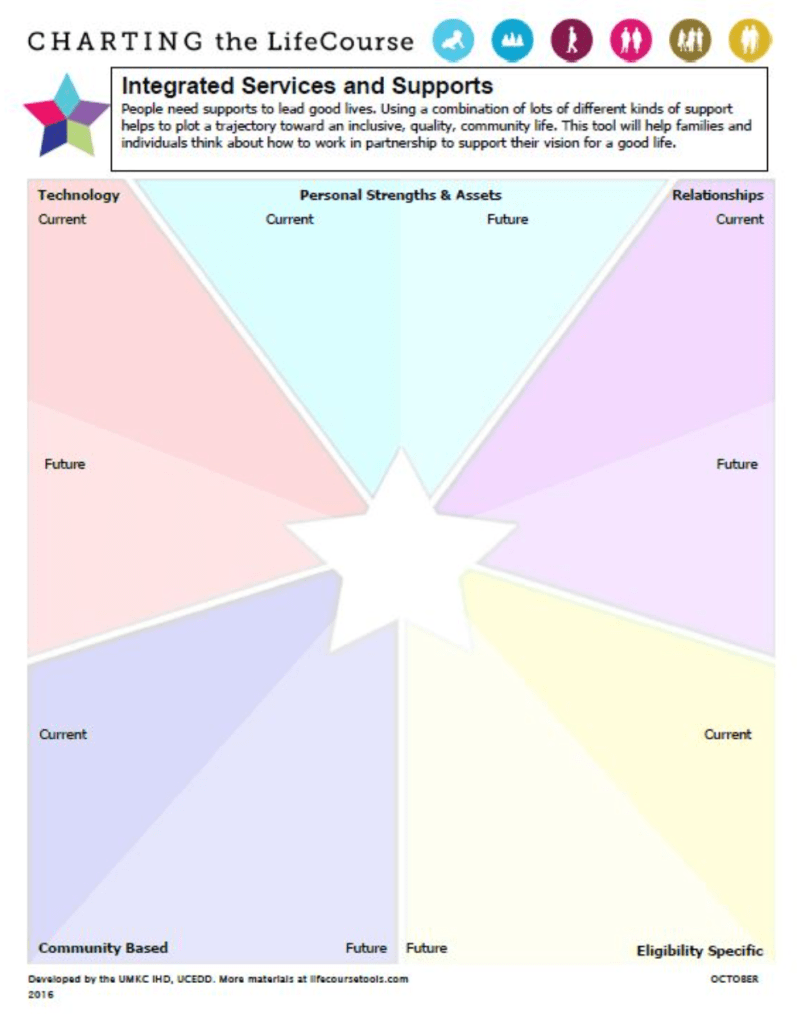
To assist L with creating this person-centered plan, we used the “Charting the Lifecourse” model.
- “The Charting the LifeCourse framework evolved within a collaborative process led by the Institute for Human Development at the University of Missouri –Kansas City, a University Center for Excellence (UCEDD) in partnership with many different national and statewide stakeholders. “ 1
I first learned about this format at The Arc of Massachusetts Transition Conference. This website has free video tutorials on how to implement the program, and all of the handouts are free to download and use. What I liked about this is that it gave L and everyone on the team a “starting point” of where to begin and what kinds of questions to ask. As he did this every year, things changed or expanded, but we had a baseline of what items needed to be looked into in more detail than what the transition planning form in the IEP was asking about. Here is one of the pieces of the LifeCourse packet:
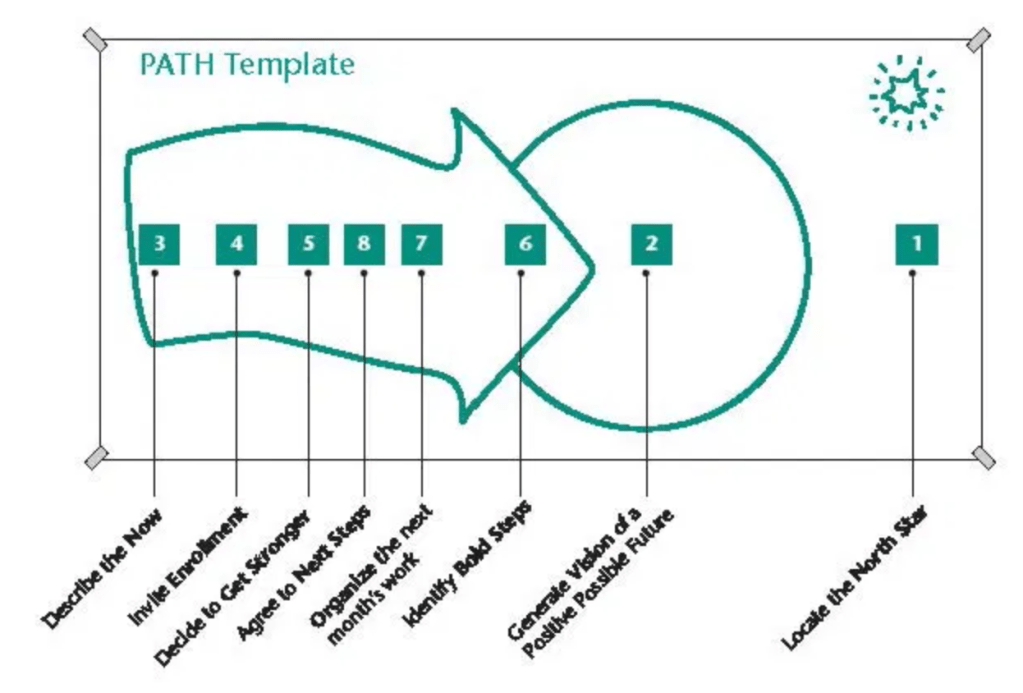
According to the Inclusion.com website, “PATH is a creative planning process which starts in the future and works backwards to an outcome of first (beginning) steps that are possible and positive.”
In this method, you start with the end goal as your #1 point, then work back to the present time and what you need to do to reach that end goal. Here is an infographic from the Inclusion.com website:
3. MAPS
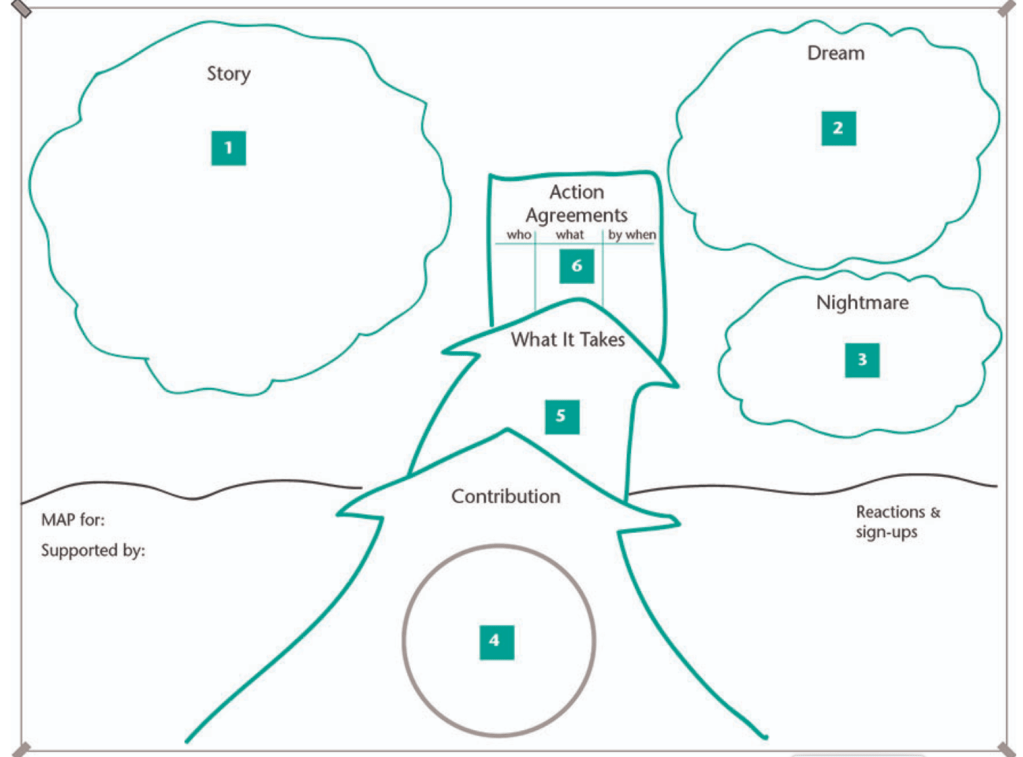
From the Inclusion.com website: “MAPS means Maps. We have abandoned acronyms. Maps is about listening to a person’s dreams, acknowledging their nightmares, then building a rich portrait of their gifts and talents to be better able to focus on simple daily actions that move them in constructive directions.”
This option is a visual-based method to “map out” a vision plan. This is a good method for people who like to storyboard their ideas instead of writing them down in a list format. Here is an image of a template for using this method:
4. Special Needs Advocacy and Training Class
This is a paid program that will walk you through all aspects of creating a Circle of Care, a person-centered plan, and transition planning resources (including information on most of the adult service agencies and applications that are mentioned in the transition planning guidelines and tools/checklist in previous post). Full disclosure: I did take this class as one of the first cohorts, and I am currently assisting the founder (Annette) on her Circle of Care paid Mighty group as a social media facilitator She is not compensating me for mentioning her course here, this is just me sharing what worked for us. If you have questions about it before enrolling, I am happy to answer any questions people have.
No matter what method you choose, the most important take away is to have your child/student’s voice be the primary driver of their person-centered plan. What strategies have you used during this process? Are there other plan outlines not listed here that you have had success with? Leave a comment to share your experience with this planning method.
-Cheryl
 #Life Without a Filter
5 thoughts on “Transition 101 #5: Empowering Individuals: Achieving Goals through Person-Centered Planning”