After we had completed enough research and networking to determine that self-direction was a path that L wanted to further explore, the second step was to create the Vision for the Participant Directed Program, aka the business proposal. As I mentioned in a previous post, the Participant Directed Model is similar to running your own business. While in some situations, the adult client can be the CEO (Chief Everything Officer), in our family, this was something that I, as L’s parent and legal guardian, was going to have to take on. In this post, I will share what we did to create the Vision Plan to submit to DDS.
For our second step, we took L’s vision for what he wanted his adult services life to look like and translated that into the Vision Support Plan. We started writing this out in January of 2022, which was 6 months before he was aging out in September 2022. Even though the final decision to do self-direction did not happen until the summer of 2022, we knew (based on our conversations with CBDS programs) that this was going to be a strong probability. I am glad that we did this research and write up in tandem with pursuing traditional programming, because if we had started this process in June for a September launch, it would have been rushed and difficult.
When we were going through this process, DDS had not launched their DDS Participant Directed Program handout (click here). At the time we were advised to create this vision statement and plan , there was no template from DDS. Looking at what we did and comparing it to what DDS is now recommending, we were luckily right on target with what they were looking for.
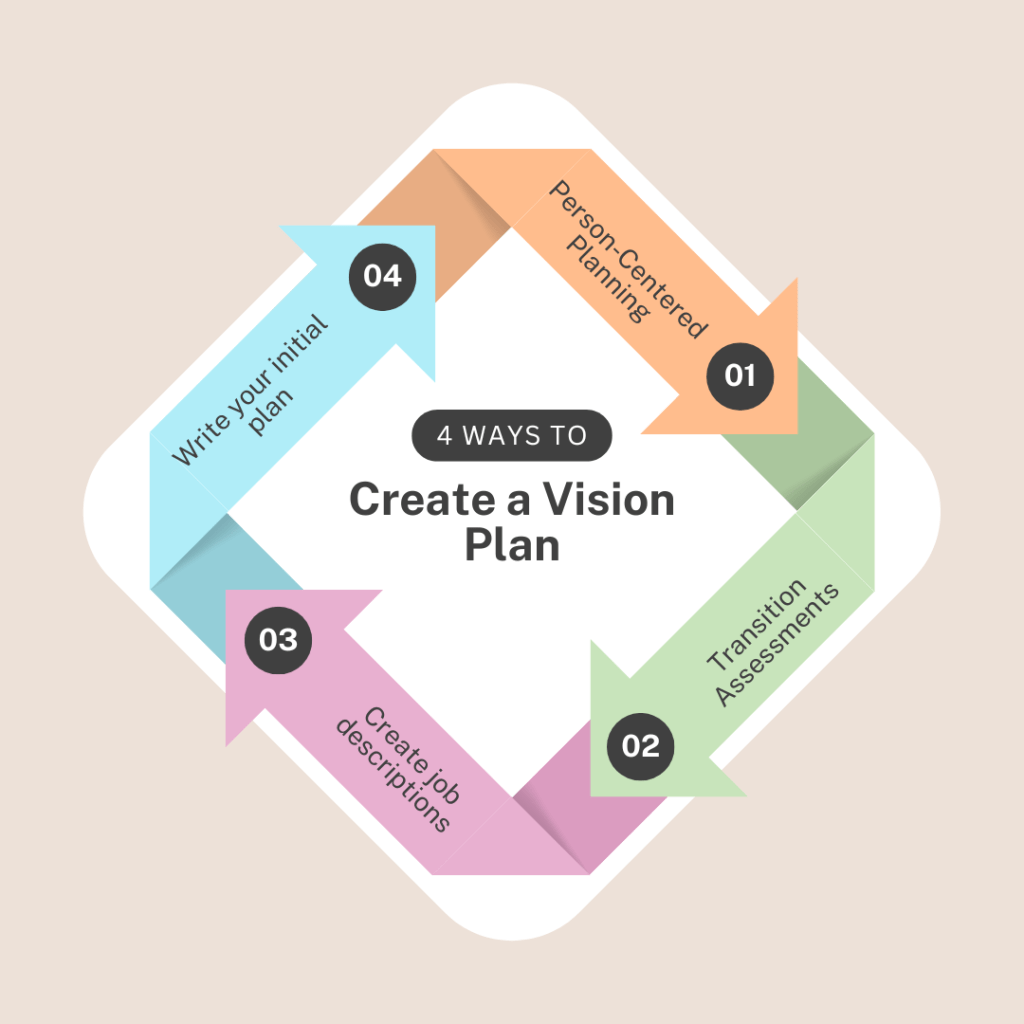
Here is the information that we used to create the Vision Support Plan:
- The Person-Centered Plan: the first and primary referenced document was the Person-Centered Plan that L had created. Fortunately, his annual IEP occurred in January 2022, so he had just completed his Person-Centered Plan for his meeting. We used the Charting the Lifecourse model from The Arc of Massachusetts as a guiding document, and he created a Google Slides presentation at school that he presented during the meeting. This information went on to create his vision and his initial goals and objectives. For more information on person-centered planning, click here to see the previous post on Person-Centered Planning.
- Transition Assessments and Evaluations: in addition to the transition assessments completed by the school district for his annual IEP, we also elected to have an outside transition evaluation completed. We primarily opted for the outside assessment because we wanted a third party to “put eyes on” our situation to ensure we were setting ourselves up for success. I also acknowledge that we were in a situation where we could financially pay out of pocket for these additional evaluations. If you cannot, you can always advocate to your school district to have specific transition training assessments completed.
- Start creating the job description: As part of the Participant Directed Program, you (the client and/or family) must create a job description for each staff member. DDS will provide you with a template, but they will not create the job description for you. We gathered job description information from other organizations to see what language was used to describe the tasks and also to get an idea of what the general pay rate was. I found this information either at the agency’s websites (if they currently were hiring) or by going to care.org and indeed.com and searching for caregivers to get an idea of the language that people were using for these specific jobs. While we did not finalize the job description until the summer, this information was helpful at this beginning stage to help us with creating the budget proposal.
- Writing the initial plan: as stated above, we started writing this plan in January 2022 and submitted our final plan to our DDS Transition Coordinator in June 2022 after determining that we would do the Participant Directed Program model starting in September. Over the course of those 6 months, we were able to really take our time with crafting language that reflected what L wanted his Person-Centered Plan to look like. Remember: this is just your initial plan. Once L started the program, he had to do his Individual Support Plan (ISP), which was the formal document that he completed with DDS. L used the information in the initial plan to guide his specific goals and objectives in the ISP.
- Mission/Vision: using the information from the Person-Centered Plan, this section included L’s vision statement for the upcoming year. He talked about how he was feeling about the upcoming transition and what his “big goals” were related to the 3 pillars of transition (continued education, vocational skills, and independent living).
- Preparation for the plan section: in this section, we listed all of the resources that were used to create the plan. This included not only the Person-Centered Plan, but also all of the evaluations (both the outside transition assessments) and L’s final 3-year reevaluations that were completed in January 2022.
- Proposed plan for the upcoming year: in this section, we captured the specific goals that L’ wanted to work on under each of the 3 pillars of transition planning. We listed the places where he wanted to explore vocational activities, ADLs he wanted to work on, and continued functional academics that would help him towards his vocational and independent living goals. (In addition to my previous post on Person Centered Planning, Section 2 of the DDS Participant Directed Program Handout reviews how to create a Person-Centered Plan and an example of the client’s vision and goals statement).
- Budget Outline: in this outline, we estimated the number of hours per week needed to execute the proposed plan. This included the number of staff and the proposed pay rate. We also included any of the ancillary costs to running the program, i.e., functional academic materials and programming costs. We split these into 2 sections and then presented the overall budget request. (In the DDS Participant Directed Program Handout, Section 5 details how to create a budget and how to present the budget to your support broker).
This information was the starting point for creating the initial budget for L’s Participant Directed Program. Once we received approval of the proposal, the next step was to have the Participant Directed Program Orientation with our DDS Transition Coordinator and a DDS Support Broker. In the meantime, we began mapping out how we were going to actually execute the plan in more detail.
Call to action: If you are starting this process, identify which Person-Centered Plan would work best for your child/student. Remember, the person-centered plan is the central component of creating a Participant Directed Program!
Call to action: review the transition assessments that are being completed. Make sure that they are capturing what your child excels at and what they need additional work and support with. This information will also help your child when determining goals and objectives for the plan.
In upcoming posts, I will go over some of the specific things that we did while waiting for approval, specifically, mapping out and getting into the details of how L’s plan was going to be executed.
-Cheryl
 #Life Without a Filter
One thought on “SD #6: Step 2–Creating a Vision Plan for a Participant Directed Program: Step by Step Guide”