As families build Participant Directed Programs for their young adults, one of the biggest questions is: How do we find the right tools and curriculum to support our child’s goals? In our son L’s case, two of his priorities identified in his person-centered plan were moving out of our home and finding employment. To help him work toward those goals, we decided to incorporate the Unique Learning System (ULS) Transition Curriculum, specifically the Transition Binder.
What is Unique Learning System?
Unique Learning System is an award-winning, standards-based curriculum designed for students with disabilities. It’s now part of the company Everway, and as someone who has worked with these products in the field of assistive technology for more than 16 years, I knew the high quality and accessibility we could expect.
It is available in multiple grade bands, including a specialized Transition Curriculum for older students and young adults preparing for adulthood. This is the version we chose for L, as it directly supports skill-building in daily living, employment readiness, and community engagement.
What is the Transition Binder?
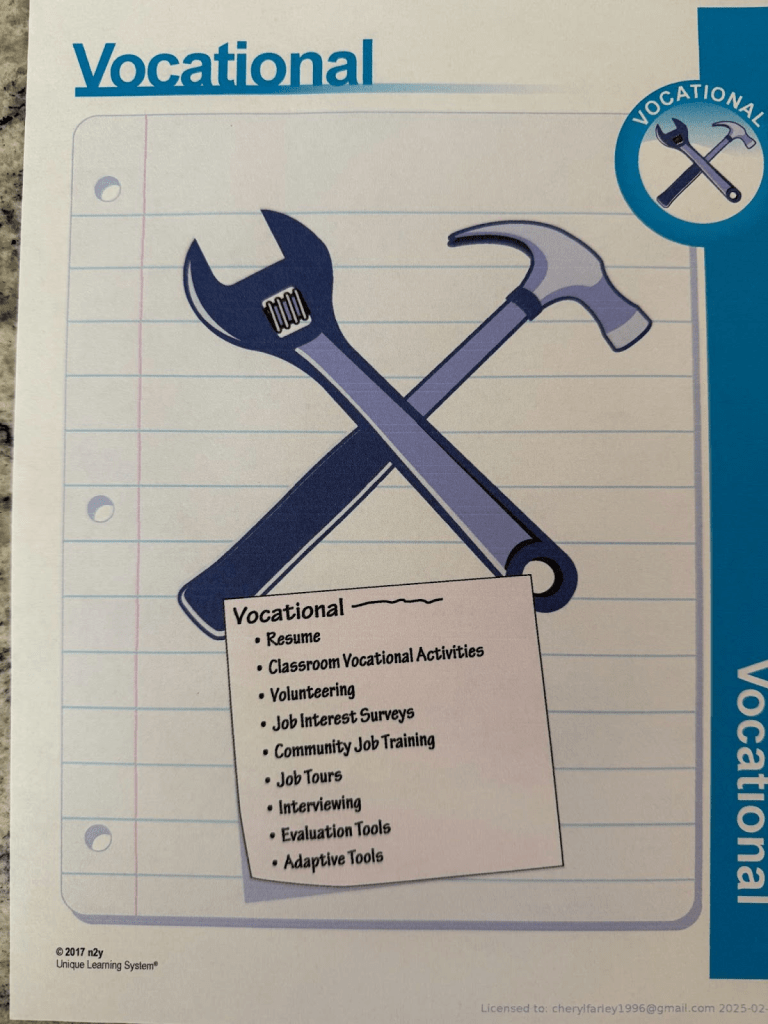
The Transition Binder is a core component of the ULS Transition Curriculum. It organizes lessons and resources into four key sections:
- Vocational – exploring career options, job readiness, and workplace skills.
- Daily Living – practicing personal care, meal preparation, money management, and other independent living skills.
- Personal Life – building self-advocacy, social skills, and recreation/leisure routines.
- Community – learning to navigate transportation, community resources, and civic engagement.
Each section contains structured lessons, activities, and assessments. For L, we chose to print the materials and organize them in a physical binder. This gives him—and his support team—a concrete, easy-to-reference resource that grows as he completes new lessons and builds new skills.
Why is the Transition Binder Important?
For our family, the Transition Binder has become a way to connect L’s long-term goals to daily learning activities. It ensures his Participant Directed Program supports the vision he created for himself, while also preparing his future caregivers with a record of his strengths and learning.
Call to Action
As you work on your child’s PCP or ISP, ask yourself:
- What are their goals for the next stage of life?
- Which programs or tools can best support those goals?
- How can we document progress in a way that builds independence and continuity of care?
When you are developing your young adult’s Person-Centered Plan (PCP) and Individual Support Plan (ISP), it’s essential to identify the goals that matter most to them—whether that’s work, independent living, social connections, or community involvement. Those goals then guide which tools and resources to invest in. Intentional choices now can set your child up for success as they move into adulthood.
For us, the Unique Learning System Transition Binder was the right fit. For your family, it may be this—or something else. What matters most is aligning the resources you choose with your young adult’s vision for their future.
—Cheryl
 #Life Without a Filter
One thought on “SD #18: Exploring the Transition Binder in Unique Learning System—and How It Can Benefit Your Program”